Want to grow your auto repair business? A strong value proposition is the key. It’s how you show customers you understand their problems, offer solutions, and stand out from competitors. Here’s what works:
- Focus on customer needs: 46% of customers will switch providers for better experiences. Highlight quality, fair pricing, and reliability.
- Reduce churn: Cutting churn by 5% can boost profits by 25% or more.
- Specialize: Niche markets like luxury or eco-friendly repairs attract high-value customers.
- Leverage digital tools: Transparency through tools like Digital Vehicle Inspections builds trust.
- Retain customers: Loyal customers are easier to sell to, with success rates of 60–70%.
Case studies in this article reveal how shops like Legends Luxury Auto Repair and Mackin’s Auto Body achieved measurable success by refining their offerings, specializing, and using marketing strategies to communicate their strengths. Whether it’s quick service, clear communication, or targeting specific vehicle types, aligning with customer priorities leads to growth.
Proven results include:
- 561% increase in website traffic for Mackin’s Auto Body.
- 70–80% conversion rates for Legends Luxury Auto Repair.
- $118,897.40 revenue boost for KA RV Repair from targeted campaigns.
Takeaway: Deliver what customers value most – trust, quality, and convenience – and use marketing to communicate your strengths effectively. This approach drives long-term growth and customer loyalty.
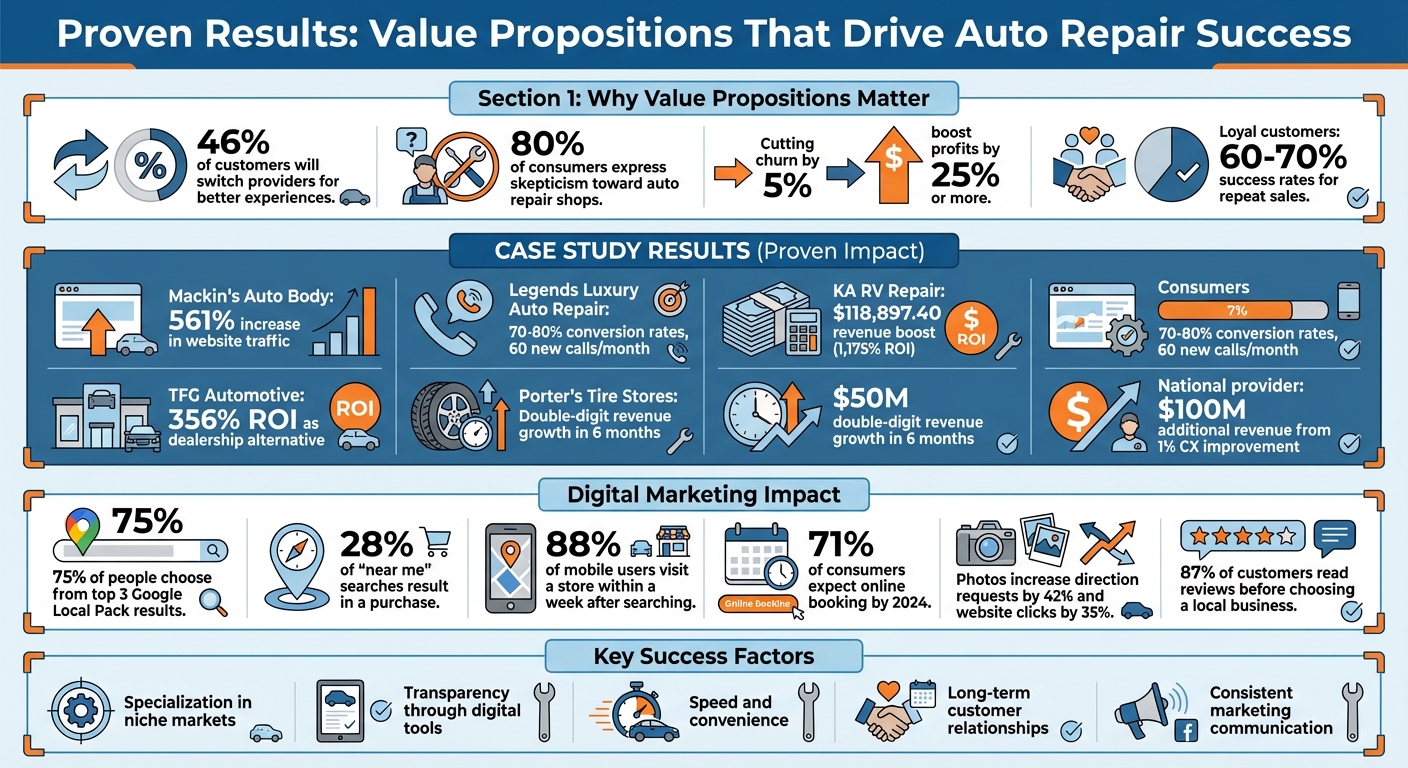
Auto Repair Value Proposition Success Metrics and Key Statistics
Why Much? How Much? Exploring Value Proposition in Auto Repair [AW 162]
How These Case Studies Were Selected
The examples highlighted here were chosen based on measurable outcomes – businesses that showed clear improvements in areas like call volume, revenue, or customer retention. For instance, Legends Luxury Auto Repair in Tempe, AZ, consistently generates around 60 new phone calls per month, with an impressive 70–80% of those calls converting into scheduled appointments. Similarly, Mackin’s Auto Body saw a 153% increase in phone calls and a massive 561% boost in website traffic after revamping their digital strategy.
The businesses selected tackled common customer frustrations – such as a lack of transparency, long repair times, or confusing industry jargon – by implementing straightforward solutions. These solutions often included tools like Digital Vehicle Inspections (DVIs), integrated shop management software, or targeted marketing campaigns. For example, TFG Automotive branded itself as a "dealership alternative" by offering dealership-level equipment at more competitive prices, achieving a 356% ROI as a result.
Selection Criteria
Each business had to meet specific benchmarks. They needed a well-defined target market, whether that meant catering to niche segments like Cadillac and Corvette repairs or appealing to eco-conscious customers. Additionally, they had to demonstrate operational improvements, such as adopting advanced technology, upgrading facilities, or enhancing quality control processes. Golden Rule Auto Care, for instance, conducted inspections on serviced vehicles over two days and found that 80% had residual issues like grease on handles or unreset warning lights.
Quantifiable results were essential. Selected businesses had to provide concrete evidence of success, such as Porter’s Tire Stores achieving double-digit revenue growth within six months. Another standout example is KA RV Repair, which generated approximately $118,897.40 in revenue – an astounding 1,175% ROI – from a targeted campaign. These results were meticulously tracked using tools like electronic management systems, customer surveys, or automated KPI dashboards. This rigorous selection process ensured a consistent and thorough analysis across all case studies.
Case Study Framework
To make comparisons easier, each case study follows the same structured format. It begins with a business profile, including details about the location, size, and market position, along with a clear statement of the value proposition – the unique promise made to customers. The implementation section then outlines the specific steps taken, such as launching multi-channel marketing campaigns, installing advanced diagnostic tools, or using digital platforms to enhance transparency.
The results section highlights key metrics, including percentage increases, revenue figures, and timeframes, all verified through methods like baseline audits, statistical modeling, or real-time monitoring tools. Finally, the lessons learned section distills actionable insights that other shop owners can adapt to improve their own operations. This consistent framework ensures each case study provides practical, valuable takeaways.
5 Auto Repair Shops with Effective Value Propositions
Here are five compelling examples that show how a clear and focused value proposition can lead to measurable success.
Case Study 1: Eco-Friendly Auto Repair
JC’s British & 4×4, based in Denver, carved out a niche by specializing in Land Rover, Jaguar, and INEOS Grenadier repairs. This targeted approach set the shop apart from dealerships, attracting customers who wanted expert care for these specific brands. By narrowing their focus, the shop not only increased the number of cars they serviced but also boosted their Average Repair Order (ARO) and overall revenue. This highlights how a well-defined niche can drive significant business growth.
Case Study 2: Speed and Convenience
Automotive Technology of West Islip tackled the issue of long wait times head-on. Through a 90-day SEO and lead generation campaign, the shop emphasized its quick turnaround times and high service standards in customer communications. The result? A surge in leads so substantial that they had to hire two additional technicians to handle the increased demand. This demonstrates the power of clear, targeted messaging in addressing customer pain points.
Case Study 3: Transparency Through Digital Tools
At Legends Luxury Auto Repair in Tempe, Arizona, owner Danny Smith leveraged his 24 years of dealership experience to focus on Cadillac and Corvette repairs. He introduced digital tools, including a "Request a Free Repair Estimate" form, which generated an average of 60 new phone calls per month. With a conversion rate of 70–80% for scheduled appointments, the shop maintained this momentum even during the challenges of the COVID-19 pandemic. This case shows how a combination of niche expertise and transparent communication can attract and retain customers effectively.
Case Study 4: Specialization in a Niche Market
Targeting specific vehicle models can attract high-intent customers. For instance, repair shops that focus on overlooked search terms, like those related to the Cadillac XLR, often stand out. This kind of specialization allows independent shops to compete with dealerships while commanding premium labor rates. RepairPal Certified Shops, known for their reliability, report an average repair order of about $800. The takeaway? Picking a niche with strong local demand and building deep expertise can justify higher pricing and foster trust.
Case Study 5: Long-Term Customer Relationships
A national auto service provider partnered with OSG Analytics to boost customer retention and lifetime value. Analyzing over 20 million annual transactions, they developed a personalized program featuring targeted service reminders and maintenance plans. This effort led to a 1% improvement in customer experience scores, which translated into an impressive $100 million in additional revenue. This example highlights how focusing on long-term relationships – through tools like automated reminders and seasonal promotions – can deliver substantial financial returns on a large scale.
sbb-itb-02fe772
Key Lessons from These Case Studies
The most successful auto repair shops share a common principle: they deliver on what they promise. Take Legends Luxury Auto Repair, for instance. They don’t just claim expertise – they back it up with decades of experience and smart marketing strategies. A value proposition only works when your team’s skills, tools, and processes consistently meet customer expectations.
Building trust often comes down to transparency. At Rev-Up Auto Care in Alexandria, Marc addressed concerns about hidden costs by offering digital updates. Clients received photos of replaced parts and precise estimates, leaving no room for surprises. As shown in other examples, such openness directly impacts customer loyalty and retention. Similarly, when Mackin’s Auto Body revamped its online presence to better reflect its core values, the results proved the power of aligning your image with your practices.
Specialization can be a game-changer when it targets unmet market needs. Whether focusing on luxury vehicles, fleet services, or electric cars, niche shops often command higher rates and see increased revenue. The secret lies in identifying underserved areas in your local market and developing expertise that general repair shops can’t compete with. This approach not only attracts customers but also creates lasting value for them.
Loyal customers are more profitable than one-time transactions. A national automotive service provider found that enhancing the customer experience – through personalized service reminders and tailored maintenance plans – led to significant financial gains. For smaller shops, tracking repair declines and following up with timely reminders can position your business as a trusted partner in vehicle care, rather than just a place to fix problems.
The best-performing shops weave their value proposition into every customer interaction, from the initial phone call to the final invoice. This consistency lays the foundation for effectively communicating your unique strengths through targeted marketing efforts.
How Marketing Communicates Your Value Proposition
Even the best service can go unnoticed without effective marketing. Let’s dive into how website design, search optimization, and PPC ads can clearly communicate your value proposition and attract customers.
Website Development for Clear Messaging
Your website acts as the core of your digital marketing efforts and often serves as the first impression for potential customers. Many successful auto repair shops use a StoryBrand approach, where the customer is the hero and your shop is the trusted guide solving their problems. For example, placing 3–4 highlighted boxes at the top of your homepage helps visitors quickly understand your main services and benefits.
Incorporating genuine photos of your team, shop, and customers can build trust and authenticity. If transparency is your priority, showcase ASE certifications, live customer reviews, and detailed lists of your specialized services. On the other hand, if convenience is your selling point, features like online scheduling, live chat, and digital drop-off forms can make a big difference. With over 71% of consumers expecting the ability to book appointments online by 2024, having a mobile-friendly, fast-loading website is no longer optional – it’s essential.
SEO and Local Search Optimization
Local SEO ensures your value proposition reaches people who are ready to take action. When someone searches for "brake repair near me" or "mechanic in [City]", they’re often looking to book a service right away. Targeting these high-intent customers – usually within a 5–15 mile radius – can make a huge impact. In fact, over 75% of people choose a business from the top three results in Google’s Local Pack.
Take Joe’s Auto Repair in Hamilton as an example. By moving from page three to one of the top three spots on Google Maps, they increased calls by 40%. Over six months in 2025, they optimized their Google Business Profile with service photos, targeted keywords, and QR codes to encourage reviews.
Creating dedicated landing pages for specific services like oil changes, engine diagnostics, or transmission repair – using geo-specific keywords – can further improve your visibility. Adding LocalBusiness structured data can also help search engines better understand your services. High-quality photos on your Google Business Profile can make a big difference too, leading to up to 42% more direction requests and 35% more website clicks. Reviews are another critical factor – 87% of customers read them before deciding on a local business. Automated follow-ups via SMS or email after service can encourage positive reviews. One shop working with 253 Media saw a 180% increase in monthly leads and climbed to the top of local map rankings.
PPC Campaigns to Highlight Your Offerings
Once your organic search visibility is in place, paid campaigns can deliver immediate results. PPC ads are especially effective for targeting high-intent local searches like "transmission repair near me." Using strategies like geo-fencing, you can focus your budget on customers within a specific radius – typically 5–7 miles.
Robertson Tire Co., Inc. is a great example of this approach. Over five years ending in 2025, the multi-location shop ran PPC campaigns that highlighted their "price match guarantee." Shane Robertson, Corporate Development Lead, explained their success:
"Using digital advertising to target people more directly, while focusing on broad reach and branding with traditional media, has been a winning combination."
To maximize results, optimize your ads with features like review stars, location extensions, and direct links to online scheduling tools. Adding conversion tracking tools like the Facebook Pixel or Google conversion tracking can help you measure key metrics, such as phone calls, appointment bookings, and direction requests, giving you a clear picture of what’s working and where to improve.
Conclusion
Having a clear, customer-focused value proposition isn’t just a buzzword – it’s a cornerstone for thriving in an industry where trust is a significant hurdle, with 80% of consumers expressing skepticism toward auto repair shops. The case studies highlight how businesses succeed by zeroing in on specific customer pain points and reshaping their services to meet these needs. Whether it’s adopting eco-friendly practices, offering unmatched speed and convenience, ensuring transparency, specializing in a niche, or building strong customer relationships, aligning with customer priorities makes all the difference.
The numbers back it up: 28% of "nearby" or "near me" searches result in a purchase, and 88% of mobile users who search for a store on Google Maps visit a related store within a week. This shows the power of reaching high-intent customers right when they’re ready to act.
To make the most of these opportunities, consider using the Problem-Solution-Benefit Framework. Identify the challenges your ideal customers face, explain how your shop solves them, and emphasize the real benefits they’ll gain. Pair this with a SWOT analysis to uncover what sets your business apart – something competitors can’t easily imitate – and establish SMART goals to measure your progress.
Beyond strategy, your digital presence should consistently reflect your core message. Auto Repair Leads Pro specializes in helping automotive repair businesses turn their unique strengths into effective digital marketing strategies. From crafting websites that communicate your value to optimizing SEO for local visibility and running PPC campaigns that deliver immediate results, outsourced marketing support allows you to focus on what you do best – fixing cars – while experts handle customer acquisition.
Ultimately, success in the auto repair industry comes down to effectively communicating what makes your shop the right choice. As the case studies show, a unified approach that highlights your strengths and meets customer needs is the key to long-term growth.
FAQs
What’s the best way for auto repair shops to communicate their value and attract more customers?
Auto repair shops can stand out by emphasizing what makes them special. For instance, prioritize exceptional customer service and use testimonials or reviews to establish trust with potential clients. Demonstrate your skills and dependability by sharing before-and-after photos, videos, or certifications that highlight your work. To reach local customers, focus on local SEO strategies and targeted online ads, ensuring your shop appears when nearby drivers are searching for repairs. By consistently delivering quality service, you’ll strengthen your reputation and build a loyal customer base.
What are the advantages of focusing on a specific niche in the auto repair industry?
Focusing on a specific niche within the auto repair industry can help your business stand out by showcasing specialized skills that foster both trust and loyalty among your customers. By narrowing your focus, you not only position yourself as an expert but also create an opportunity to charge higher rates for your services, all while facing less competition in your chosen specialty.
This approach also simplifies your marketing efforts. With a clear target audience in mind, it becomes easier to craft messages that resonate, drawing in the customers who need exactly what you offer. Over time, this strategy can strengthen your customer relationships and lead to a more profitable and stable business.
How do digital tools like Digital Vehicle Inspections help build customer trust in auto repair services?
Digital Vehicle Inspections (DVIs) play a key role in building customer trust by providing clear, visual evidence of a vehicle’s condition. Through photos, videos, and detailed reports, auto repair shops can show customers exactly what’s happening under the hood, eliminating guesswork.
This transparency doesn’t just improve communication – it empowers customers to make informed decisions about repairs. When people can see the issues for themselves, they’re more likely to feel confident in the recommendations, strengthening their trust in the shop’s expertise and honesty.