Creating a clear and consistent brand message is essential for auto shops to stand out, build trust, and grow revenue. Your brand messaging should reflect your shop’s values, expertise, and personality while connecting with your target audience. Here’s the key takeaway: trust, consistency, and a unique identity drive customer loyalty and set your shop apart.
Key Points:
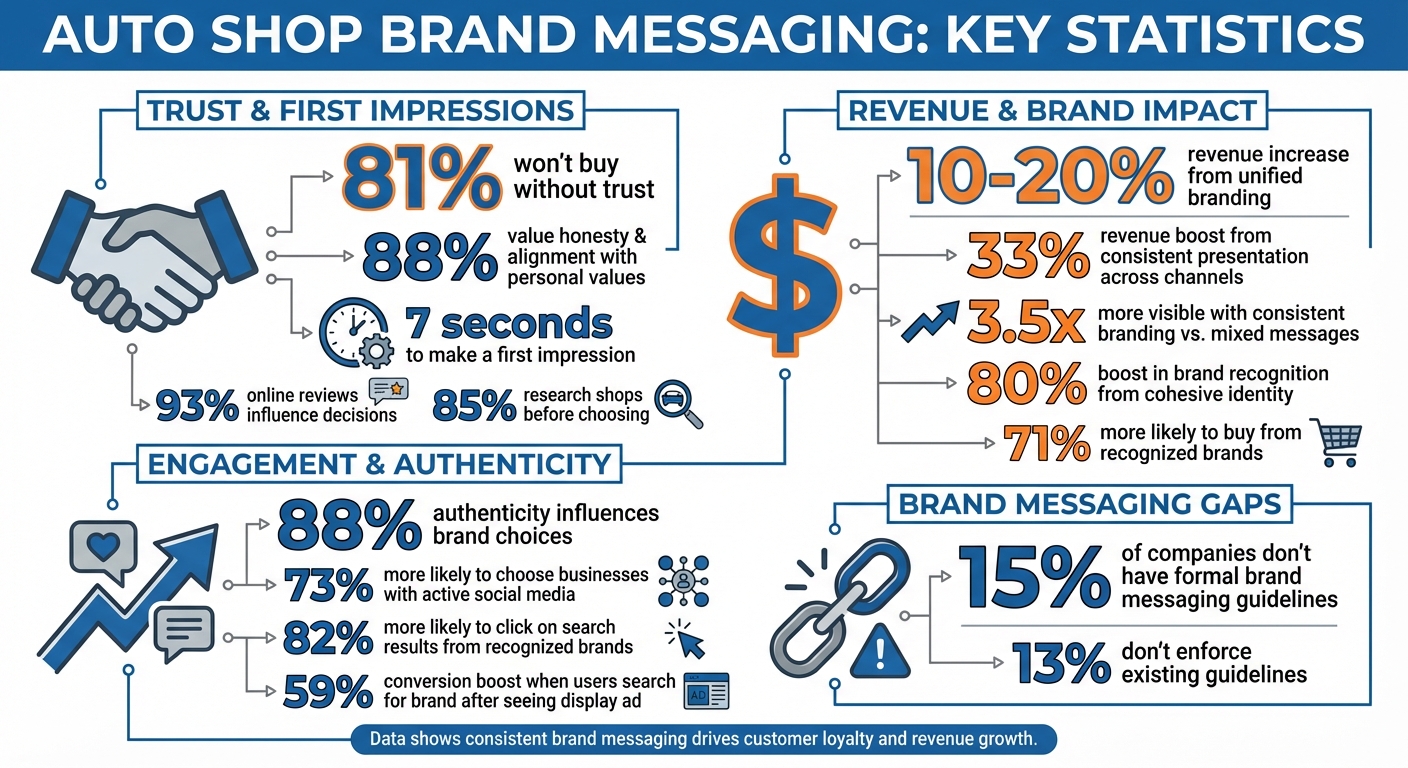
- Trust is critical: 81% of consumers won’t buy without trust, and 88% value honesty and alignment with their personal values.
- First impressions matter: You have just 7 seconds to make an impression.
- Consistency boosts revenue: Unified branding can increase revenue by 10%–20%.
- Focus on your “why”: Define your purpose and target audience to create a message that resonates.
- Highlight what makes you different: Whether it’s specialized skills, warranties, or community involvement, showcase your unique strengths.
How to Get Started:
- Define your brand identity: Clarify your purpose, values, and target audience.
- Craft a mission statement: A short, clear statement that guides your messaging.
- Develop a consistent voice and tone: Align your communication across platforms and customer interactions.
- Localize your message: Tailor your content to reflect your community’s needs and preferences.
- Measure effectiveness: Use metrics like website traffic, customer feedback, and revenue trends to refine your approach.
By focusing on trust, clarity, and consistency, your auto shop can create a lasting impression that builds customer loyalty and strengthens your brand.
Auto Shop Brand Messaging Statistics and Key Metrics
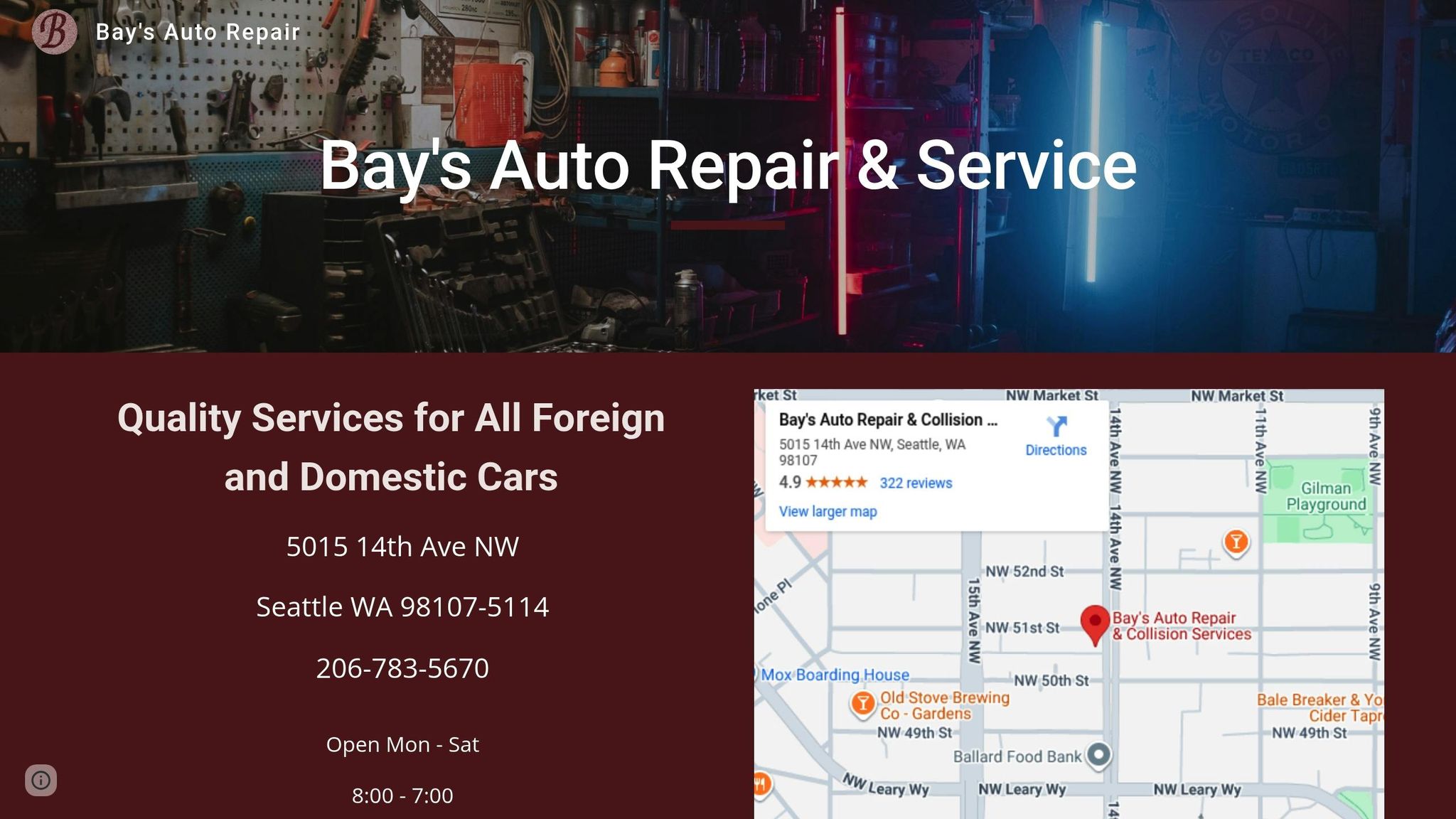
Bays Auto Repair | Brand Message Video
Defining Your Auto Shop’s Brand Identity
Your brand identity is the cornerstone of how customers see your business. It’s more than just repairs – it’s about understanding your purpose and letting that purpose guide everything, from your website’s tone to how your staff interacts with customers.
Start by defining your "why." As Simon Sinek famously said, "People don’t buy what you do; they buy why you do it. The goal is not to do business with everybody that needs what you have. The goal is to do business with people who believe what you believe". Ask yourself: Are you addressing a specific need in your community? Are you creating a welcoming space for all? Your purpose will anchor every decision you make about how your shop communicates and operates.
Equally important is understanding your target audience. Take a close look at your current customers: What types of vehicles do they drive? Where do they live? What’s their age range and household income? This data helps you identify patterns and tailor your brand to meet their needs. For example, a shop catering to luxury car owners in a wealthy suburb will have a different tone and focus than one serving tradespeople with fleet vehicles.
Next, figure out what makes you stand out from the competition. This isn’t about vague claims – it’s about specifics. Do you specialize in European cars? Offer a relaxing beauty lounge in your waiting area? Provide a warranty that goes above and beyond? Brian Walker, Co-owner of Shop Marketing Pros, puts it best: "Uniqueness is a gift. People are naturally attracted to different".
Identifying Core Values and What Sets You Apart
Pinning down your core values means taking an honest look at what truly matters to your business. These aren’t just lofty ideals – they’re the principles that guide your daily decisions and how you treat your customers. To uncover them, consider using customer surveys to learn what clients appreciate about your shop or what they’d like to see improved.
Take a close look at your local competitors. What are they doing, and where are the gaps you can fill? For instance, if every shop in your area emphasizes speed, you could stand out by focusing on thoroughness and customer education. Or, if others highlight technical expertise, you might differentiate with conveniences like after-hours drop-off or a shuttle service.
Once you’ve identified your values and what sets you apart, craft a mission statement. This short, focused statement should clearly define your shop’s purpose and target audience. It will serve as a guide for all your branding efforts and ensure your messaging stays consistent. Think of it as your shop’s North Star – just one or two sentences that explain why you exist and who you’re here to help.
Incorporate modern trends to make your messaging resonate locally. For example, if you use eco-friendly parts, biodegradable fluids, or offer EV charging, make those part of your story. Highlighting a diverse team or offering bilingual services can also help reflect the community you serve.
| Branding Element | Purpose | Examples for Auto Shops |
|---|---|---|
| Core Message | The "Why" behind the business | Empowering female drivers; Supporting working families with transparent pricing |
| Value Proposition | What makes the shop unique | Beauty lounge in waiting area; Complimentary pressure checks; Specialized classic car restoration |
| Target Audience | Who the messaging is for | Luxury car owners; Commercial fleet managers; Local families with minivans |
With your core values and unique strengths in place, the next step is to give your brand a personality that brings it all to life.
Establishing Your Brand Personality
Now that you’ve defined your values, it’s time to shape a personality that reflects them. Imagine your auto shop as a person walking into a room. Are they laid-back and approachable? Professional and detail-oriented? Funny and conversational? Or perhaps serious and technical? This personality should influence everything, from your social media posts to your email signatures.
Choose four adjectives that best describe your shop’s personality – words like neighborly, innovative, precise, or fearless. These become your guide when creating content. For example, if "neighborly" is one of your adjectives, your website copy should feel warm and inviting. If "precise" is on your list, your messaging should highlight attention to detail and technical expertise.
This personality also helps address the stress and skepticism many customers bring to auto shops. People often worry about repair costs or fear being taken advantage of. A clear and consistent personality can ease those concerns. David Rogers, President of Auto Profit Masters, says it well: "Branding is all about setting expectations. Before you start telling your story or even think about advertising, make sure you can live up to the promises you’re making".
Don’t forget that visual elements play a big role in reinforcing your personality. Fonts, colors, and logos all create subtle impressions that stick in customers’ minds. A high-performance-focused shop might use bold and dynamic visuals, while a family-oriented one might opt for softer, more comforting designs. Everything from your waiting room decor to your staff uniforms should reflect this personality.
The goal isn’t to appeal to everyone. A well-defined brand personality will naturally attract the right customers while filtering out those who aren’t a good fit. This isn’t a drawback – it’s a strength. When your personality aligns with your ideal customers’ values and preferences, you build stronger relationships and reduce the focus on price alone.
Creating a Consistent Brand Voice and Tone
Once you’ve defined your shop’s personality, keeping your message consistent across all platforms is key. This consistency helps your brand feel familiar and dependable – like a trusted friend customers can turn to. It also ensures your online and in-person interactions align, reinforcing trust at every touchpoint.
It’s important to understand the difference between voice and tone. Your voice stays the same – it might be professional, approachable, or community-focused – while your tone adjusts to fit the context. For instance, you might adopt a compassionate tone when a customer is dealing with a major repair, but take on a more lighthearted tone for a playful social media post.
Why does consistency matter? The data speaks for itself: maintaining a unified brand presentation across channels can boost revenue by up to 33%. On the flip side, inconsistent messaging can plant seeds of doubt in your customers’ minds.
Choosing a Voice that Connects with Customers
To lock in a voice that resonates, create a style guide based on a voice audit. This guide should highlight 3–5 key personality traits, like "Authoritative yet Friendly", "Neighborly and Precise", or "Innovative and Trustworthy." Use it as your north star for everything from email templates to social media posts.
A voice audit can help you figure out what language clicks with your audience. Start by analyzing your best-performing content – like emails or social posts – to identify patterns in the tone and language that engage readers. You can also go straight to the source: ask your customers, "If our shop were a person, how would you describe them?" Their answers will reveal whether your intended identity matches their perception.
Authenticity is non-negotiable. In fact, 88% of consumers say authenticity influences their brand choices. If your shop is family-owned, lean into that sincerity instead of trying to sound like a big corporate dealership.
Keep in mind that different customer groups may expect different communication styles. Luxury car owners might prefer polished, detail-rich messaging, while commercial truck drivers likely value straightforward, no-frills communication.
| Communication Channel | Recommended Tone | Goal |
|---|---|---|
| Website/Blog | Expert, Helpful, Clear | Build authority and provide solutions |
| Social Media | Playful, Casual, Engaging | Build community and humanize the shop |
| In-Person/Phone | Empathetic, Professional | Build trust and provide reassurance |
| Invoices/Reports | Precise, Transparent | Show value and professionalism |
By sticking to a consistent voice, you’ll naturally create clear, benefit-driven messaging that connects with your audience.
Using Clear and Benefit-Focused Language
When writing for your website or other materials, keep it simple and focus on benefits rather than features.
For example, instead of saying, "We replace brake rotors and calipers", you could say, "Keep your family safe with our 15-point brake inspection". As Hibu aptly puts it:
"Describing who you are… what key services you provide… and what sets you apart as concisely as possible makes your company appear more professional and efficient".
Avoid overwhelming customers with technical jargon. If you need to explain a complex repair, use relatable metaphors. For instance, instead of saying, "Your catalytic converter has substrate degradation", you might explain, "Think of your catalytic converter like a filter – it’s clogged and needs replacing so your engine can breathe again".
You can also reinforce trust visually. Display trust icons on your website and printed materials, like logos of ASE certifications or well-known supplier brands.
Finally, tie your messaging to the calendar. For example, send out reminders for A/C tune-ups in spring or offer winterization tips in the fall. This positions your shop as a proactive partner, always looking out for your customers’ needs – not just when something goes wrong.
Applying Brand Messaging Across Marketing Channels
Your brand messaging should stay consistent, no matter where customers encounter it – whether they find you on Google, scroll past your Facebook post, or walk into your store. This isn’t just about keeping your visuals aligned. Businesses with consistent branding are 3.5 times more visible to customers compared to those with mixed messages. Even better, sticking to a unified brand message can increase small business revenue by 10% to 20%.
The tricky part? Each platform serves a unique role. Your website is your virtual storefront, Facebook fosters community, Instagram highlights your visual identity, and your Google Business Profile captures local search traffic. Even with these different purposes, your core message – what your business stands for – needs to remain the same across all of them.
Imagine this: your website reads like a formal guidebook, but your Instagram captions are filled with emojis and memes. That kind of inconsistency leaves customers scratching their heads. As Susie Marino from LocaliQ explains:
"If the copy on your website sounds like it was written by a serious British butler, but the posts on your social media account seem like the work of an emoji- and meme-obsessed teenager, people are going to be confused".
To avoid this, create clear guidelines that everyone in your business can follow. This could include a simple document outlining your visual elements (like logos, colors, and fonts) and communication standards (such as tone and word choice). A brand kit – complete with hex codes for your colors, font names, and logo variations – gives your team a handy reference to maintain consistency.
Don’t overlook your physical presence either. Your shop signage, employee uniforms, business cards, and even vehicle wraps should match your online branding. A cohesive visual identity boosts brand recognition by up to 80%, and 71% of consumers are more likely to buy from a brand they recognize.
Building a Unified Online Presence
Once you’ve nailed down your brand’s tone, it’s time to extend that consistency across all your online platforms. Start with a brand audit. Compare your website, Facebook page, Instagram profile, and Google Business Profile side by side. Do they share the same logo, color scheme, and tone? Does your "About Us" section tell the same story everywhere? If not, it’s time to get everything aligned.
Each platform serves a specific purpose. Facebook is great for building community and sharing educational content, like local events or safety tips. Instagram lets you show off your work visually with repair photos or behind-the-scenes moments. Meanwhile, your Google Business Profile is essential for local search visibility and managing your reputation.
Although the content might differ, your message should always reflect your brand’s identity. For example, if you position your business as "The Neighborhood Expert", that expertise should shine through in everything – from detailed blog posts to quick Instagram stories.
Consistency is key, so use a content calendar to post regularly (aim for three to five times a week). Regular updates build trust; in fact, 73% of consumers are more likely to choose a business with an active social media presence. Keep your marketing materials organized in a shared digital folder so your team always has access to the latest logos, images, and templates.
Don’t forget to leverage customer testimonials and reviews. Share them on your website, social media, and Google Business Profile to build trust. Authenticity matters – 88% of consumers say it influences their brand choices.
| Platform | Primary Purpose | Recommended Tone | Content Examples |
|---|---|---|---|
| Website | Conversion & Information | Authoritative, Clear | Service pages, online booking, mission statement |
| Community Engagement | Friendly, Informative | Safety tips, local events, customer reviews | |
| Visual Storytelling | Creative, Personal | Repair photos, shop culture videos, tool highlights | |
| Google Business | Local Search & Trust | Professional, Direct | Service descriptions, business hours, review responses |
Training Staff to Communicate Your Brand
Your brand’s message doesn’t stop with digital platforms – it also needs to come through every interaction your team has with customers. From how your service advisor greets someone to how a technician explains a repair, every touchpoint shapes how your brand is perceived. As RepairPal puts it:
"A repair shop’s employees are always marketing, acting as brand ambassadors in every customer interaction".
Surprisingly, 15% of companies don’t have formal brand messaging guidelines, and 13% don’t enforce the ones they do have. To avoid this pitfall, create a style guide that outlines your brand’s personality in three to five key traits. Include specific vocabulary to use (and avoid) and clear dos and don’ts for customer interactions.
Host training sessions to help your team practice using your brand voice. Role-playing exercises are especially effective. For example, train staff to balance being clear and authoritative when explaining technical issues while staying empathetic and approachable when addressing customer concerns.
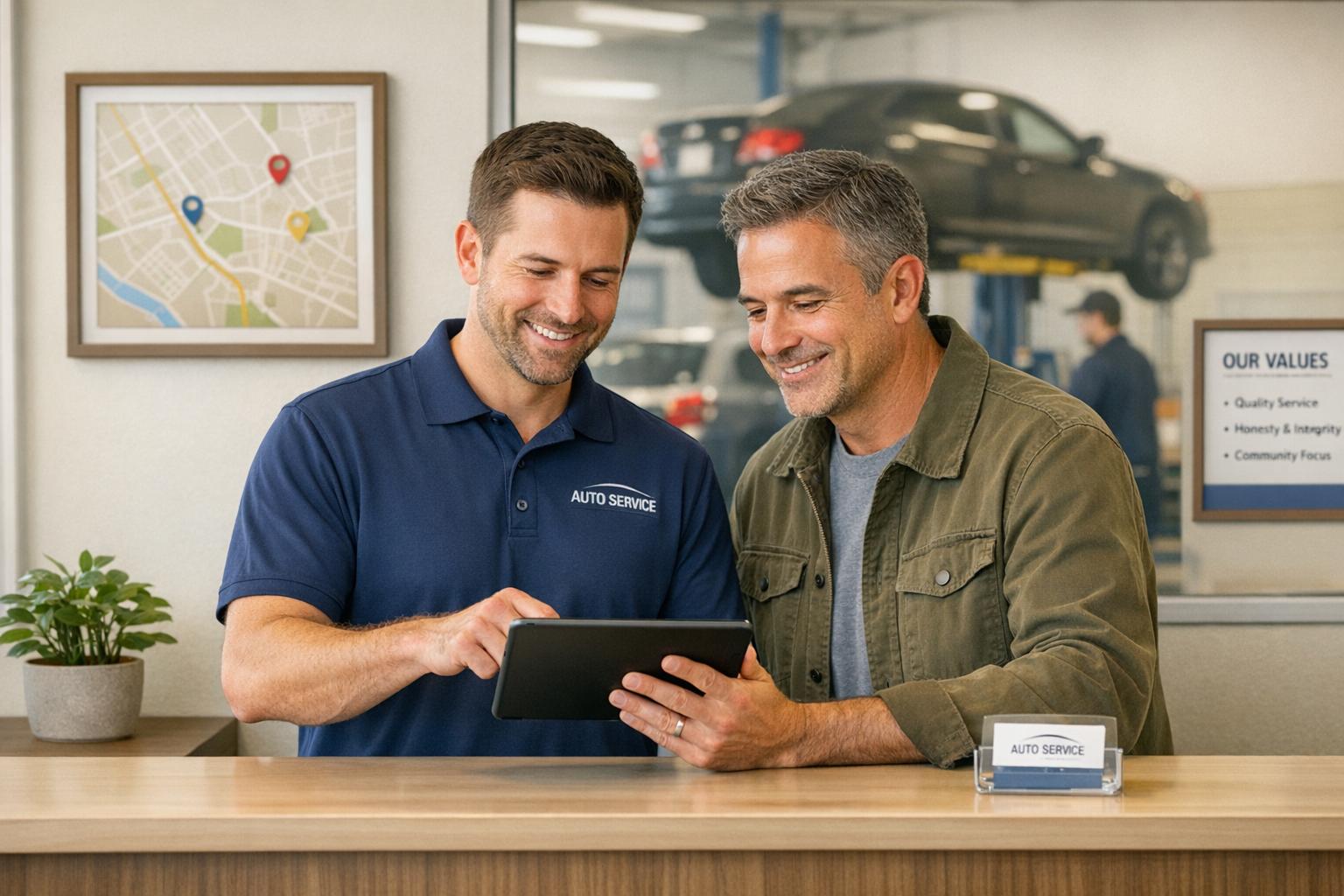
Visual aids can also reinforce your standards. For instance, feature photos on your website of staff interacting with customers – a service advisor handing over keys with a smile or a technician explaining a repair under the hood. These images set a clear example of professionalism and customer care.
Adopt StoryBrand’s concept of treating the customer as the hero and your team as the expert guides. Standardize key interactions, like training service advisors to ask every new customer, "How did you hear about us?" in a conversational and friendly way.
You can even encourage your technicians to create content. Offer small incentives for writing blog posts or recording short videos about interesting repairs. This not only generates authentic content but also showcases your team’s expertise.
| Training Element | Purpose | Practical Application |
|---|---|---|
| Brand Characteristics | Defines personality | Choose traits like "Honest", "Expert", or "Friendly" |
| Do’s and Don’ts | Sets interaction boundaries | Provide phrases and examples to follow or avoid |
| Tone Framework | Guides appropriate responses | Train staff to adjust tone based on the situation |
| Best Practice Samples | Offers clear templates | Share scripts of successful customer interactions |
Finally, consider using a Customer Relationship Management (CRM) system to keep track of customer history. This allows your team to personalize follow-ups and maintain a consistent, thoughtful approach. For example, when a customer returns, your staff can reference previous visits, making the interaction feel seamless and genuine. This kind of attention to detail shows that your brand genuinely values its customers.
sbb-itb-02fe772
Localizing and Personalizing Your Brand Messaging
Once you’ve established a consistent brand voice and visual identity, the next step is to localize your messaging. Speaking directly to your community builds trust and makes your brand feel more relatable. When your message reflects the unique needs and character of your area, you position yourself as the go-to local expert who truly understands what matters most to your neighbors.
Using Local Language and References
To connect more deeply with your community, tailor your messaging to reflect regional nuances. The language you use should feel familiar and relevant to the people in your area. For instance, if your shop is in New England, you might highlight issues like road salt damage or the challenges of harsh winters. In contrast, a shop in Miami could focus on heat-related wear and hurricane readiness. These regional touches show that you’re not just a business – you’re a part of the community, aware of its specific challenges.
Your visuals should also reflect your local surroundings. Instead of generic stock photos, incorporate images of recognizable landmarks or seasonal scenes. For example, a winter tire campaign could feature a local frozen lake or snow-covered park instead of a random snowy road. These familiar visuals create a stronger emotional connection and reinforce your presence as a local business.
In areas with diverse populations, consider adding bilingual or multilingual content to your messaging. Simple efforts like having service advisors who can explain repairs in Spanish or posting social media updates in multiple languages can go a long way in making all customers feel welcome.
Community involvement is another powerful way to personalize your brand. Hosting events like "Cars & Coffee" meetups or offering free safety clinics for new drivers can position your shop as more than just a repair service – it becomes a valued community partner. As Tristan Corrin, Former Senior Sales Manager at AutoLeap, puts it:
"Nice things will come back to your shop if you regularly perform good deeds. Not everything is about attracting new clients. It’s about making a difference in the communities you call home".
This localized strategy enhances your overall branding by grounding it in the needs and values of your community.
Sharing Customer Reviews and Testimonials
Customer reviews are more than just a credibility boost – they give your brand a personal touch by letting your neighbors speak for you. With 93% of consumers saying online reviews influence their decisions and 85% researching auto repair shops online before choosing one, reviews are a critical part of your marketing.
But don’t let reviews sit passively on a website – use them as active marketing tools. Highlight specific testimonials that showcase the services you want to emphasize. For example, if a customer praises your brake service or transmission repairs, feature that review prominently on your website or social media. This builds trust by showcasing real, local results.
Responding to reviews – both positive and negative – is just as important. Avoid generic replies like "Thanks for your feedback." Instead, personalize your responses by mentioning the customer’s name and details about their visit. For example: "Thanks for bringing in your F-150, John! We’re thrilled to hear the front-end suspension rebuild is working perfectly". As Brian Walker, Owner and CEO of Shop Marketing Pros, explains:
"A simple, sincere response goes a long way. It shows you care. When future customers read those responses, they see the difference".
Video testimonials take things a step further by adding emotion and authenticity. A short, unscripted clip of a happy customer sharing their experience can resonate more than text alone, especially with younger audiences. These videos don’t need to be professionally produced – raw, genuine moments often feel more relatable. Ask satisfied customers if they’d be open to recording a quick video right after their service, while their positive experience is still fresh.
Repurpose these reviews and testimonials across all your marketing channels. Add them to your auto repair web design, share them on social media, and even include them in email signatures. By weaving customer voices into your messaging, you’re not just promoting your services – you’re showcasing the trust and satisfaction of your community. This approach ties together a locally grounded and customer-driven brand message.
Measuring the Effectiveness of Your Brand Messaging
Creating a solid brand message is just the beginning – you also need to know if it’s hitting the mark. Without tracking the right metrics, you might think your messaging is working when it’s not. Paul Donahue, Owner of Advanced Digital Automotive Group, puts it perfectly:
"Marketing performance doesn’t come with a ‘check engine’ light. If you don’t measure the right signals, it’s easy to assume things are working when they’re not."
To get a clear picture, focus on both leading indicators (early signals like website traffic or phone inquiries) and lagging indicators (outcomes like monthly revenue or repeat customer rates). Leading indicators help you spot potential problems early, giving you time to tweak your messaging. Meanwhile, lagging indicators confirm whether your past strategies delivered results. Together, these metrics provide a solid foundation for evaluating the effectiveness of your brand messaging.
Auditing Brand Messaging Across All Channels
Every customer touchpoint matters – your website, social media profiles, Google Business Profile, email signatures, flyers, and even phone interactions. Inconsistencies in logos, colors, tone, or messaging can confuse customers and erode trust. For instance, if your website says one thing but your social media posts say another, it sends mixed signals.
Use analytics tools to evaluate your digital touchpoints. A high bounce rate could mean your messaging isn’t aligning with visitor expectations. For example, if someone lands on your brake repair page but leaves immediately, your ad might be attracting the wrong audience or making promises it can’t keep. Metrics like branded search volume can also indicate whether your messaging is resonating. In fact, 82% of people are more likely to click on a search result from a brand they recognize.
Develop a consistent review routine to stay ahead of shifts in customer behavior. For example:
- Weekly: Check leads and top-performing website pages.
- Monthly: Review SEO and ad performance.
- Quarterly: Dive deep into revenue trends and Average Repair Order (ARO) data.
This steady rhythm ensures you’re always in tune with how customers are responding to your messaging.
Using Customer Feedback and Engagement Data
While metrics show trends, customer feedback explains why those trends exist. Combining hard data – like call volume, appointment bookings, and social media engagement – with qualitative insights from surveys, reviews, and direct conversations paints a fuller picture of your brand’s impact.
Ask new customers where they first encountered your brand. Whether it was a Facebook ad, a Google search, a yard sign, or a recommendation from a friend, their answers reveal which touchpoints are most effective and worth further investment.
Keep an eye on assisted conversions in your marketing reports. For example, someone might see your display ad but not click on it, then later search for your business by name and book an appointment. Research shows a 59% boost in conversions when users search for a brand after seeing a display ad.
Social media mentions and on-page engagement can also confirm whether your messaging is connecting. Positive reviews that highlight “fast service” or praise your team for “explaining everything clearly” suggest that your emphasis on transparency and efficiency is landing well. On the flip side, if you market “premium service” but reviews focus on affordability, there’s a disconnect between your message and customer perception.
Track engagement metrics like time spent on specific pages or the number of pages visited per session. If visitors are reading your entire "About Us" page or watching your team introduction video, it’s a sign your brand story is resonating. If they’re leaving after just a few seconds, it’s time to rethink your approach. Remember, 81% of consumers need to trust a brand before making a purchase, and consistent messaging across all channels can increase revenue by 10–20%.
Conclusion
Brand messaging is the promise you deliver at every customer interaction. In an industry where trust is everything, consistency is key – it takes just 7 seconds for someone to form a first impression. That means every detail matters, from your Google Business Profile to the way your service advisor answers the phone. Together, these moments tell the story of your brand.
Start by defining your core values and what makes your shop stand out. Are you the friendly neighborhood garage that treats customers like family? Maybe you’re the go-to team for European imports, blending expertise with cutting-edge tech. Or perhaps your mission is to empower women to feel confident about car care. Whatever your focus, remember: people don’t just buy what you do – they buy why you do it. Build connections with customers who share your values.
Once you’ve established your identity, make sure it’s reflected everywhere. Audit your website, social media, email signatures, and even your physical signage to ensure they all share the same voice, colors, and personality. A brand toolkit can help – it should include guidelines for your logo, color palette, and tone of voice so your team stays on the same page. From defining your values to aligning your digital and in-person presence, every step strengthens your brand.
Keep your messaging sharp by monitoring key metrics. Track leading indicators like website traffic and phone inquiries, as well as lagging ones like monthly revenue and repeat customer rates. Use customer feedback to adjust your approach and make sure your message continues to hit home.
Your brand is more than a logo or tagline – it’s the impression you leave behind. Make sure it’s authentic, consistent, and memorable. By following these strategies, you’ll reinforce your shop’s promise and build a reputation that stands out in the auto industry.
FAQs
How can auto repair shops create a strong and unique brand identity?
Creating a strong brand identity starts with understanding what sets your shop apart and the reason it exists. Is your focus on affordable repairs? Top-notch luxury service? Or perhaps creating a warm, inclusive environment for every customer? Define your purpose clearly, then build a core message around it – something like "Quick, dependable repairs for drivers on the go." Pair this with a consistent tone that mirrors your shop’s personality, whether that’s professional, friendly, or community-driven, and let it shine in every interaction.
Your visual elements – logo, color palette, and signage – should reflect this identity, ensuring your shop is instantly recognizable, whether it’s on a billboard or a receipt. Take time to review customer feedback and analyze competitor messaging to ensure your brand connects with the people you aim to serve. Consistency is key, so make sure your website, social media, and even your shop’s waiting area all reflect the same cohesive image. Tools like Auto Repair Leads Pro can simplify this process, helping you create a unified online presence that aligns perfectly with your brand.
How can auto repair shops ensure consistent brand messaging across all platforms?
To keep your brand messaging consistent, start by crafting a core message that clearly reflects your shop’s purpose, values, and tone. Document this in a brand style guide, covering key elements like logo usage, color schemes, typography, and preferred language. This guide acts as a blueprint, ensuring every interaction – whether it’s your website, social media, or even service invoices – presents a cohesive and professional image.
Organize your branding assets in one place and create templates for emails, social media posts, advertisements, and printed materials. This approach helps maintain uniformity across all channels. Make it a habit to review platforms like your website, SEO content, PPC campaigns, social media, and customer communications to confirm they align with your brand guidelines. For added support, consider working with experts like Auto Repair Leads Pro to develop a tailored messaging framework. Consistency in your message strengthens trust, builds credibility, and fosters long-term customer loyalty.
Why should auto repair shops tailor their brand messaging to local audiences?
Tailoring your brand messaging to local audiences allows auto repair shops to connect with customers on a deeper, more personal level. By aligning your communication with the preferences, values, and needs of the community, you can build trust and strengthen customer relationships. This approach not only encourages loyalty but also helps create a sense of belonging, which can translate into higher customer retention and increased sales.
Localized messaging also plays a key role in ensuring compliance with regional regulations and standards. This attention to detail helps present your business as professional and reliable. By addressing the specific concerns and expectations of local customers, auto repair shops can stand out in a crowded market and deliver an experience that feels tailored to their needs.