Most drivers don’t trust auto repair shops. In fact, 66% of drivers feel uneasy about their repair facility, and 64% of dealerships struggle to retain customers. Why? A lack of understanding about vehicles often leaves customers feeling vulnerable. But there’s a solution: video testimonials.
Here’s why videos work:
- 72% of people trust brands more when they see positive video reviews.
- Videos improve message retention by 95%, compared to just 10% for text.
- They can boost purchase intent by 97%.
To build trust, focus on real customer stories. Highlight their challenges, how your shop solved them, and the results. Keep the videos natural and genuine – this emotional connection is what helps customers choose your business.
Share these videos on your website, social media, and Google Business Profile to reach more people. Track metrics like engagement, appointments, and revenue to measure success. Shops using video have seen upsell rates jump by 212% and customer approval for repairs increase from 24% to 51%.
Want more loyal customers? Start sharing real stories through video.
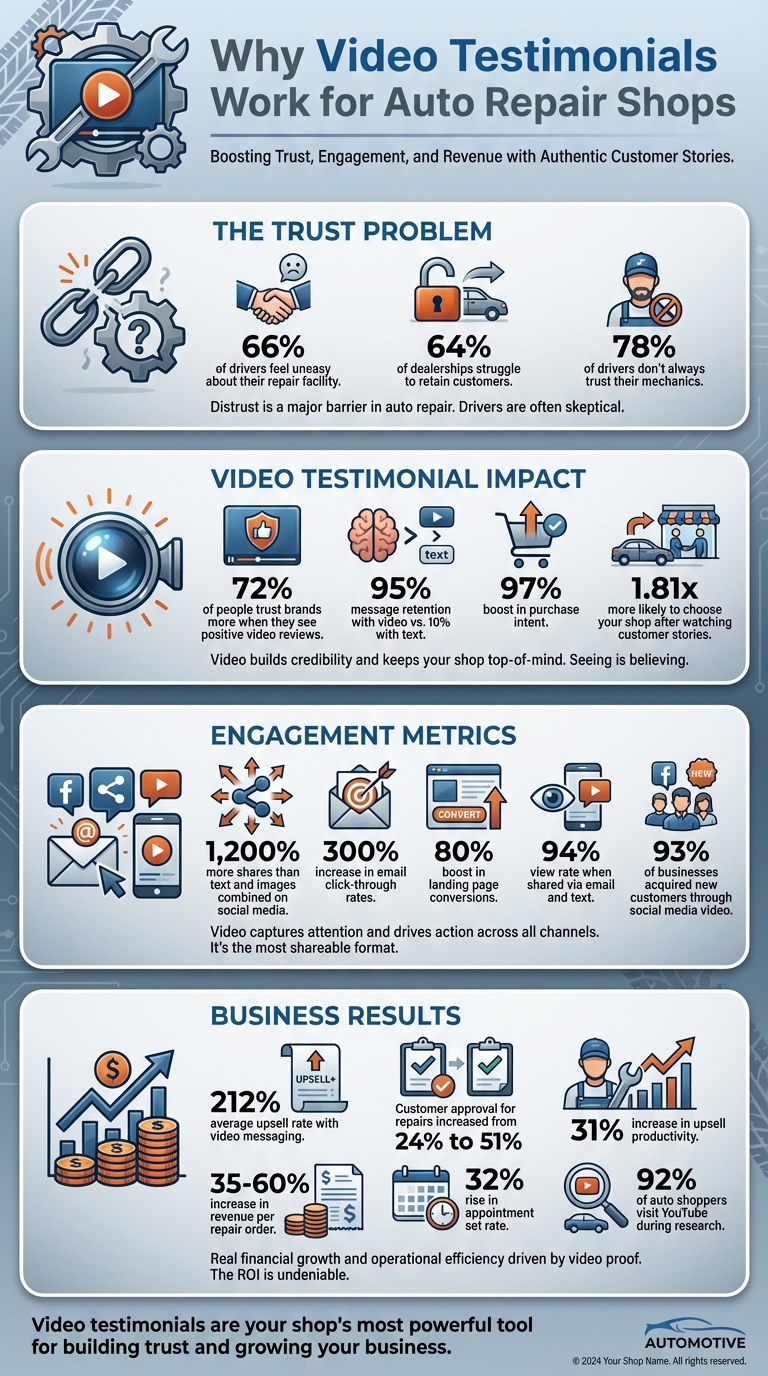
Video Testimonial Impact Statistics for Auto Repair Shops
Step 1: Finding the Right Customer Stories
Choosing Which Customers to Feature
Focus on customers who’ve experienced a noticeable transformation – those who came to you with a major vehicle issue and left with a solution that exceeded their expectations. These before-and-after stories create relatable and impactful narratives that potential customers can connect with.
When a customer is thrilled with your service, ask for a video testimonial right away while their experience is still fresh in their mind. It’s also a good idea to showcase a variety of repair scenarios, so future clients can see how you handle a range of challenges.
Don’t shy away from featuring customers who were initially skeptical or had concerns. If they became loyal advocates after you resolved their issues professionally, their stories can highlight your dedication to earning trust. This is especially important when studies show that 78% of drivers don’t always trust their mechanics.
Once you’ve identified the right stories, focus on turning these experiences into compelling narratives that resonate emotionally.
What Makes a Good Customer Story
A strong customer story is built around a simple framework: problem, solution, and result. The customer takes center stage as the hero, while your shop plays the role of the trusted guide. These stories not only highlight your technical expertise but also build trust, which is essential in this industry.
Start by outlining the problem – maybe their car broke down unexpectedly, or they were quoted an unusually high price elsewhere. Then, show how your team stepped in with clear communication, expert repairs, and fair pricing. Wrap up with the results: timely service, money saved, or even restored confidence in their vehicle.
Step 2: Writing Stories That Connect Emotionally
Using Simple Story Structures
Once you’ve picked the right customer stories, it’s time to shape them with a straightforward structure. A problem-solution-outcome framework works well because it aligns with how people naturally understand and relate to stories. Instead of just laying out the structure, focus on crafting a narrative that emphasizes the stakes – this is what makes the story truly resonate. For example, video testimonials can capture authentic expressions and tones that help create a deeper emotional bond with viewers. With the structure in place, the real magic happens when you bring genuine emotion into the storytelling.
Showing Real Emotions and Experiences
A good narrative becomes unforgettable when it’s infused with real emotions. These emotional connections are what drive customer decisions, loyalty, and even advocacy. Moments like a customer’s relief after a problem is solved or their frustration from earlier struggles can strike a chord with viewers who’ve faced similar challenges. To keep these moments authentic, avoid over-scripting – let customers speak naturally, even if they pause or stumble. This approach preserves the genuineness of their experience. Ultimately, how a story feels is what sticks with people far longer than any technical details. Whether it’s gratitude, relief, or newfound confidence in their vehicle, these raw, real emotions are what potential customers will remember when it’s time for their own repairs.
Step 3: Recording Quality Customer Videos
How to Record Natural Testimonials
When it comes to capturing customer testimonials, making the customer feel at ease should take priority over the technical setup. Start by having a casual conversation with them before recording to help break the ice. Sharing the interview questions a few days in advance can also encourage more genuine, heartfelt answers. Pick a quiet location free from distractions to create a relaxed atmosphere.
During the interview, ask open-ended questions that allow the customer to share their experience in their own words. For instance, asking, "What issues were you experiencing with your car before bringing it in?" can lead to a more engaging response than a simple, "Were you happy with the service?" Keep the camera rolling, even during pauses or moments of nervous laughter – these candid moments often add a layer of authenticity to the video. According to research, 92% of consumers trust recommendations from individuals they don’t know more than traditional brand messaging.
"The more natural you can be, the more impactful the testimonial."
- Lauren Thomas, Head of Content, Vouch
Once the conversation feels natural, it’s time to focus on capturing high-quality video and audio.
Getting Good Video and Audio Quality
You don’t need an elaborate setup to create credible, professional-looking videos. A smartphone with a decent camera, a basic tripod, and a ring light are often enough to get the job done. With 75% of digital content being consumed on mobile devices, videos shot on a phone can feel relatable and effective. Position your subject in natural light whenever possible, or use a ring light to ensure they’re well-lit.
Audio quality is just as important as video. Record in quiet spaces, away from noisy equipment or other distractions. If background noise sneaks in, apps like CapCut or InShot can help clean it up during post-production. For example, an auto repair shop using TruVideo software created custom repair videos that not only increased upsell productivity by 31% but also strengthened customer trust. These videos were often filmed in a single take using handheld devices, proving that authenticity can easily outweigh polished, high-budget productions.
Step 4: Sharing Videos to Reach Your Audience
Optimizing Videos for Local Search
Once you’ve recorded customer testimonials, the next step is making sure your local audience can easily find them. Start by embedding these videos into platforms like your Google Business Profile and Yelp listings. This not only enhances your shop’s visibility in local search results but also makes a strong impression. For instance, when someone searches for "auto repair near me", a video testimonial can be the deciding factor that brings them to your shop.
Your website is another powerful tool for local search optimization. Embed these videos within blog posts that target location-specific keywords. For example, if your shop is in Houston, you could write a post titled "How to Fix a Flat Tire in Houston, Texas" and include a relevant customer story. This strategy ties your video content to your local area, potentially boosting your search rankings. Statistics show that video marketers generate 66% more qualified leads annually compared to those who don’t use video, so this effort can pay off significantly.
Using Multiple Marketing Channels
To maximize your video’s reach, share it across a variety of platforms. Post it on your website, Facebook page, YouTube channel, and even include it in email campaigns or text messages. Each platform engages customers at different points in their decision-making process. With about 90% of local businesses already active on social media, meeting your audience where they spend their time is essential.
Real-world examples highlight the impact of video. Jack Bryan, a Sales and Leasing Consultant at Windsor Chrysler, shared a video announcing his move to a new location. Within a day, the video received over 83 views and contributed to 15 closed deals. Similarly, an agent at Bruce Titus Auto Group saw his closing rate leap from 2% to 23% after incorporating video into his communication strategy.
"Share videos through email, text, your CRM, or social media to engage buyers, drive in-store traffic, and set 3x more appointments." – Covideo
You can also use video for retargeting campaigns, reconnecting with potential customers who visited your website but didn’t book an appointment. Another effective strategy is running targeted YouTube ads aimed at viewers watching automotive DIY videos. This positions your shop as the go-to solution when DIY repairs become overwhelming. By delivering consistent messages across multiple platforms, you not only build trust but also reinforce your brand’s credibility.
sbb-itb-02fe772
Measuring Video Performance
Tracking How People Engage with Videos
Keeping tabs on how viewers interact with your videos is key to understanding their impact. For instance, Jack Gardner, CEO of Quik Video, shared that his company achieved an impressive 94% view rate by sharing video links through both email and text message. To compare, email alone resulted in a 50% watch rate, while text messaging reached 66%.
Social media engagement is another critical area to monitor. Videos on platforms like Facebook and Instagram generate a staggering 1,200% more shares than text and images combined. Pay attention to likes, comments, and shares to see how effectively your videos are resonating with your audience. These interactions often reveal whether your videos are building the emotional connection necessary to foster trust within your community.
By analyzing these engagement metrics, you’ll gain valuable insights into how your videos contribute to lead generation and conversions.
Measuring New Leads and Conversions
At the end of the day, the ultimate measure of your video’s success is its ability to drive conversions. Keep an eye on key actions like online appointment bookings, phone calls, and contact form submissions that stem from your video campaigns. Research shows that 93% of businesses have acquired a new customer through social media.
To assess your return on investment (ROI), track how videos directly impact revenue. For example, video testimonials can significantly boost customer approval rates for recommended repairs, jumping from 24% to 51%. Dealerships that use video messaging see a 212% upsell rate on average, while video-based multi-point inspections can increase revenue per repair order by 35–60%. Ashley Cavasos, Senior Manager of Digital Sales, highlighted the power of video, reporting a 32% rise in set rate and over 1,500 additional appointments year over year after adopting video communication tools.
Don’t hesitate to ask new customers how they found your business. This straightforward question can help you directly attribute growth to specific video campaigns, giving you the information you need to refine your strategy. For auto repair businesses looking to harness actionable insights, tools like Auto Repair Leads Pro offer analytics solutions tailored to optimize video performance and fuel growth.
How to Get Great Testimonial Videos From Clients
Conclusion
Customer story videos are a powerful way to build trust and credibility for your auto repair business. When potential customers watch real people sharing their honest experiences about your services, they’re 1.81 times more likely to choose your shop. Unlike text, videos create emotional connections that stick – viewers retain the message at much higher rates. This makes them a key tool for fostering deeper customer relationships across your marketing efforts.
The impact doesn’t stop at gaining trust. In 2016, Bryan Armstrong from a Volkswagen dealership in South Jordan, UT, saw firsthand how video testimonials could turn one-time customers into loyal advocates. He even had customers requesting specific mechanics by name.
To get started, focus on selecting enthusiastic customers who can naturally share their experiences. Keep videos short – under two minutes – and prioritize authenticity. Share these videos across your website, social media platforms, and email campaigns. The numbers back it up: adding video can increase email click-through rates by 300% and boost landing page conversions by 80%.
Track metrics like view rates, engagement, and how videos drive appointments and revenue. By analyzing what works, you can fine-tune your approach and get the most out of your investment. Consistently showcasing real customer stories through video strengthens your shop’s reputation and attracts loyal clients. For those looking to take their efforts further, Auto Repair Leads Pro offers tailored analytics and marketing services specifically for the automotive repair industry.
In today’s market, the businesses earning customer trust are those sharing authentic stories through video. With 92% of auto shoppers visiting YouTube as part of their research, your customer testimonials need to be where potential clients are looking. Start recording and sharing genuine experiences to build lasting trust and grow your business.
FAQs
How can video testimonials help build trust in auto repair shops?
Video testimonials are a powerful way to build trust by sharing real customer experiences in a relatable and engaging format. When people see others talking about their positive interactions, it creates an emotional connection and gives your business a sense of authenticity.
Featuring happy customers helps potential clients feel more assured about choosing your services or products. It shows them that others have had great experiences, which can make your business feel more approachable and trustworthy.
What makes a customer story in a video testimonial effective?
An impactful customer story in a video testimonial should come across as genuine and easy to relate to. Focus on the specific struggles the customer experienced, how your service addressed their needs, and the results they achieved. Adding emotional touches can help viewers form a stronger connection.
To keep the video interesting, use a mix of visuals – like clips of the customer, your team at work, or the repair process. Make sure the video follows a clear flow: start with the problem, move to the solution, and finish with the results. Wrap it all up with a strong call to action that motivates viewers to reach out to your business.
What are the best ways for auto repair shops to share customer story videos and reach more local customers?
Auto repair shops can expand the audience for their customer story videos by sharing them on multiple platforms. Upload these videos to your shop’s website and social media channels like Facebook, Instagram, and YouTube. Don’t forget to add them to your Google Business Profile – this can help attract attention from local searches. You can also include the videos in email campaigns to engage current customers and encourage word-of-mouth referrals.
To reach even more potential customers, think about using targeted ads on platforms like Google and Facebook. These ads can help you connect with people in your area who might need your services. Keep an eye on video performance using analytics tools to see what content clicks with your audience. Use those insights to tweak your strategy as needed. With a steady and thoughtful plan, your videos can leave a strong impression.