Want your auto shop to grow? These 12 marketing tasks are the key to attracting new customers, keeping loyal ones, and boosting your visibility. From building a mobile-friendly website to managing online reviews and running targeted ads, this checklist simplifies marketing for auto repair shops. Here’s what you’ll learn:
- Website Essentials: Create a fast, mobile-friendly site with clear service details and customer reviews.
- Local SEO: Optimize your Google Business Profile and use local keywords to rank higher in searches.
- Online Reviews: Ask happy customers for feedback and respond professionally to all reviews.
- PPC Advertising: Use platforms like Google Ads and Facebook to reach customers searching for repair services.
- Social Media: Post engaging content like before-and-after photos and promote local deals.
- Customer Retention: Use automated reminders, loyalty programs, and personalized follow-ups to keep customers coming back.
- Community Engagement: Partner with local businesses, sponsor events, and join community activities.
- Seasonal Promotions: Offer timely services like winter inspections or summer A/C maintenance.
- Data Tracking: Use tools like Google Analytics and Auto Repair Leads Pro to measure what’s working.
Boost Your Auto Shop’s Growth: 2025 Marketing Strategies For Car Repair, Body Shops, PDR
Website Development and Optimization
A well-designed website can turn local visitors into loyal customers. Since your website is often the first interaction potential clients have with your auto repair shop, it’s crucial to get the basics right. Here’s how to create a site that makes a lasting impression.
Build a Mobile-Friendly and Fast-Loading Website
Most local searches happen on smartphones, especially when customers need urgent repairs. That’s why optimizing your site for mobile devices is non-negotiable.
Make sure your site loads in under three seconds. Slow websites can frustrate users and drive them elsewhere. To speed things up, compress images, choose a reliable hosting provider, and use a clean, simple design that works seamlessly on any device.
Test your site on different devices to ensure buttons are easy to tap, text is readable, and contact information is clear. A mobile-friendly design doesn’t just improve user experience – it also boosts your search engine rankings.
Add Key Information for Customers
Your website should make it easy for visitors to find the information they need without digging through multiple pages. Clear, accessible details help potential customers feel confident about choosing your shop.
- List Your Services: Include a detailed list of services, along with brief descriptions. For instance, under brake repair, mention tasks like inspections, pad replacements, rotor resurfacing, and brake fluid checks. This transparency highlights your expertise and reassures customers about the value you provide.
- Show Business Hours: Display your hours prominently on every page so visitors know when they can call or stop by.
- Offer Easy Contact Options: Include your phone number, address, and email on every page. For mobile users, a click-to-call button can make reaching you even easier. Adding an online booking system or a simple contact form shows you’re accessible and professional.
Display Customer Reviews and Service Area Maps
Customer reviews are powerful tools for building trust. Highlight a few recent reviews on your homepage, along with the type of services provided. This can reassure potential clients about the quality of your work.
A service area map is another great addition. It visually shows the range of your services, making it clear where you operate. Consider adding before-and-after photos of your work (with customer permission) to showcase your skills.
To further enhance your site, include a frequently asked questions section. Address common concerns like pricing, warranties, and turnaround times. This not only reduces routine inquiries but also shows you’re transparent and customer-focused. Together, these website features can boost your local visibility and strengthen your overall marketing efforts.
Local SEO and Google Business Profile Optimization
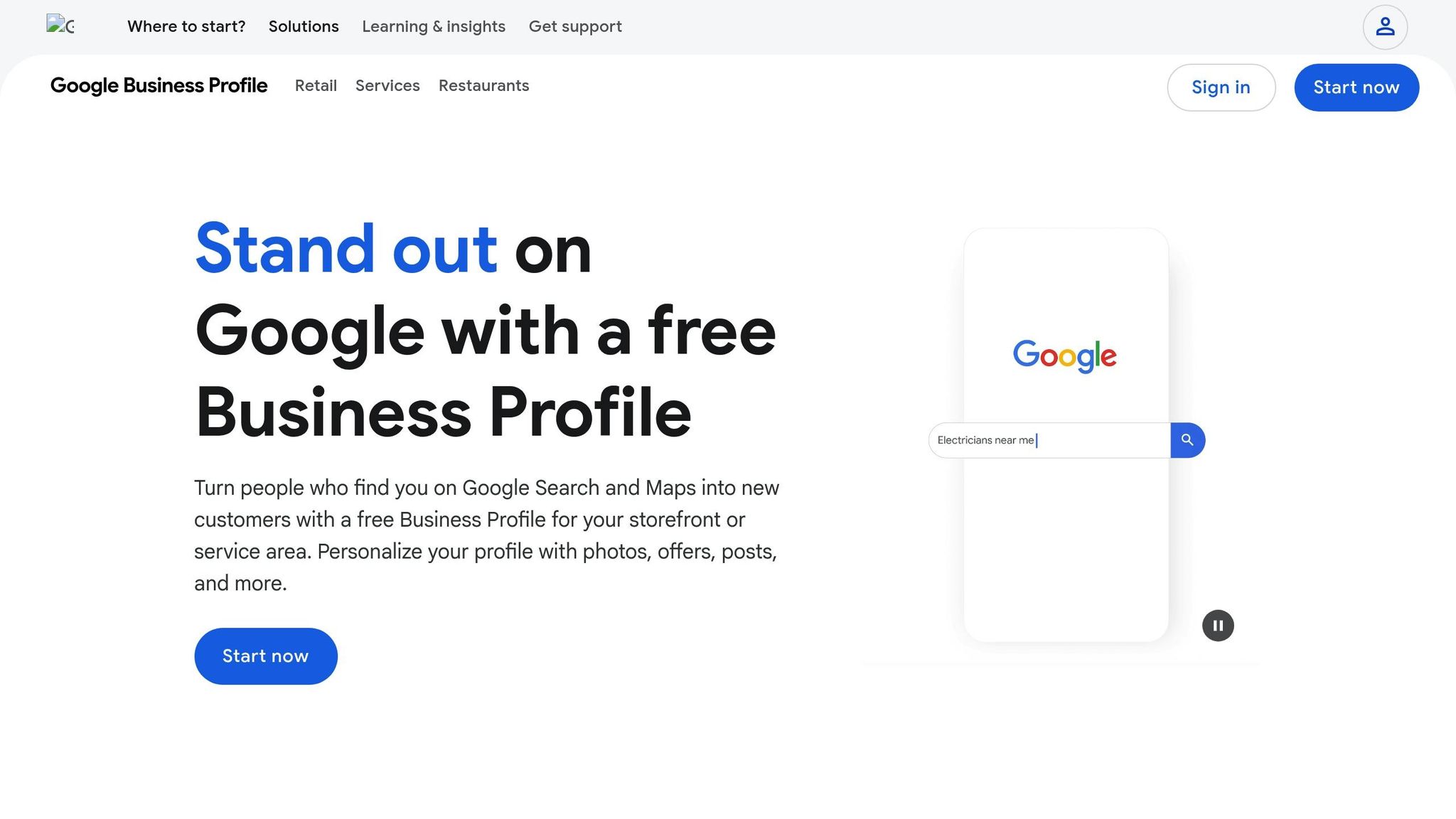
Local searches are a powerful way to connect with customers. When someone types in "brake repair near me" or "oil change in [your city]", your shop needs to show up at the top. To make that happen, search engines must clearly understand what services you offer and where you’re located. One key step? Optimizing your Google Business Profile to strengthen your local visibility.
Optimize Your Google Business Profile
Think of your Google Business Profile as your shop’s virtual storefront. It’s often the first thing potential customers see, so every detail counts.
Start by selecting "Auto repair shop" as your primary category. Then, add specific secondary categories like "Brake shop" or "Transmission repair service" to better define your services. Include 10-15 high-quality photos of your shop – showcasing work bays, equipment, and completed repairs. Refresh these photos every few months to keep your profile looking current.
Write a clear and detailed description, like: "Family-owned auto repair shop in [your city] since 1995, specializing in brake repair, engine diagnostics, and routine maintenance." This helps both customers and search engines understand your expertise.
Enable the messaging feature and respond quickly to inquiries. This not only boosts your local rankings but also shows potential customers that you’re professional and attentive.
Target Local Keywords
Using local keywords effectively can help your website show up when customers search for services in your area. The key is to weave these keywords naturally into your content.
Focus on service-location phrases. For example, instead of just "brake repair", use "brake repair in [your city]" or "brake service near [neighborhood name]." These longer, more specific phrases (known as long-tail keywords) are easier to rank for and attract customers who are ready to book services.
Incorporate these local keywords into page titles, headers, and throughout your content. For instance, a page about transmission repair might have a title like: "Transmission Repair Services in [Your City] | [Your Shop Name]." Within the content, mention local landmarks or neighborhoods: "We offer transmission repair services throughout downtown [city name] and surrounding areas, including [neighborhood names]."
If your shop serves multiple areas, consider creating separate location-specific pages. These pages can target keywords for each neighborhood or nearby town and include helpful details, like driving directions or local partnerships.
Keep Your Information Updated
Consistency is critical when it comes to your business information. Inaccurate or inconsistent details across platforms can confuse search engines and potential customers, ultimately hurting your local rankings.
Make sure your name, address, and phone number (NAP) are identical everywhere – your website, Google Business Profile, Yelp, Facebook, and other directories. Small discrepancies, like using "Street" on one platform and "St." on another, can cause issues.
Update your hours promptly for seasonal changes and share updates about your services or business through your Google Business Profile. For example, post about new equipment, staff certifications, or seasonal maintenance tips. These updates appear in search results and can make your profile stand out.
Finally, monitor your listings regularly, using tools like Google Alerts to spot and fix inaccuracies quickly. The more consistent and accurate your information is across the web, the better your chances of ranking well in local searches.
Online Reviews and Reputation Management
Once you’ve built a strong online presence, managing customer reviews becomes a crucial part of maintaining your auto shop’s credibility and boosting its visibility in search results.
Your online reputation plays a huge role in your shop’s success. Research shows that 95% of consumers read online reviews before making decisions. This means potential customers are forming opinions about your business long before they step through your doors or pick up the phone.
Creating and maintaining a solid review profile takes effort, but the rewards are worth it. Customers trust businesses with genuine, up-to-date reviews, and search engines use these signals to decide which shops rank higher in local search results.
Ask Customers for Reviews
The best time to ask for a review is when your customer is happiest – right after you’ve fixed their car and they’re driving away satisfied. But the way you ask matters. It shouldn’t feel forced or overly rehearsed.
In-person requests can be very effective. Train your team to bring up reviews naturally during checkout. For example: "If you’re happy with our service, we’d really appreciate it if you could share your experience on Google." You can also hand them a business card with a QR code or a link to your Google Business Profile.
Follow-up messages are another great option. Sending a text or email 24–48 hours after the service feels less intrusive and gives customers time to reflect on their experience. Keep it short and friendly: "Hi Sarah, thanks for trusting us with your Honda’s transmission service yesterday. If you have a moment, we’d love to hear about your experience on Google Reviews."
Timing and tone are key. Avoid requesting reviews right after presenting a large repair bill or when a customer seems stressed. Instead, focus on those who expressed satisfaction, asked thoughtful questions, or complimented your team’s work.
Respond to Reviews Professionally
Every review counts, whether it’s glowing praise or constructive criticism. Your responses give potential customers a glimpse into how you handle feedback and show your dedication to customer service.
For positive reviews, reply promptly and with genuine gratitude. Use the customer’s name and reference specific details from their review. For example: "Thank you, Mike, for sharing your experience! We’re so glad Tom was able to diagnose your engine issue quickly and get you back on the road the same day." Sharing these reviews on social media can also amplify their impact and make customers feel appreciated.
Negative reviews require careful handling. Always respond professionally, addressing the customer’s concerns directly. Apologize when necessary and offer a resolution, like: "We’re sorry to hear about this and would like to make it right. Please call us at (555) 123-4567 so we can discuss this further." Avoid arguing or making excuses publicly. Keep your response brief, respectful, and focused on finding a solution.
"Responding to reviews, whether positive or negative, demonstrates engagement and professionalism. Address concerns politely, thank customers for feedback, and highlight actions taken to improve services. Active review management strengthens credibility and signals to search engines that the business is reliable."
This thoughtful approach to feedback not only builds trust with customers but also lays the groundwork for using specialized tools to streamline the process.
Use Reputation Management Tools
As your shop grows and more reviews roll in, managing them manually can become overwhelming. Reputation management tools simplify the process and help you stay organized.
Auto Repair Leads Pro is one such tool designed specifically for auto shops. It tracks reviews across platforms like Google, Yelp, and Facebook, sending instant notifications whenever a new review is posted. This allows you to respond quickly – something both customers and search engines appreciate. Combining these tools with your personal touch ensures consistent, high-quality interactions.
Templates for review responses can save you time while keeping your replies personalized. For example, you can create templates for thanking customers, addressing service concerns, or responding to pricing questions. Customize them for each situation to maintain a professional yet approachable tone.
Analytics and reporting features are another game-changer. These tools let you monitor trends in your ratings, spot recurring complaints, and measure how your review management efforts are paying off. Some even offer private feedback channels where customers can voice concerns directly to you, giving you the chance to resolve issues before they turn into public reviews.
Set aside time each week to review new feedback, respond to outstanding reviews, and analyze patterns in customer comments. This proactive approach not only helps you improve your operations but also shows customers that their opinions matter to your business.
Pay-Per-Click (PPC) Advertising
PPC advertising is a quick way to get results, often faster than organic strategies. Imagine someone searching for "brake repair near me" – your ad could show up right at the top, even outside your regular business hours.
The concept is simple: you pay only when someone clicks on your ad. This makes PPC a smart option for connecting with customers actively searching for auto repair services. Plus, it’s easy to track your spending and measure how well your ads are performing.
To make PPC work for you, it’s critical to choose the right platforms, set a budget you’re comfortable with, and keep a close eye on performance. Auto shops that nail these basics often see a noticeable uptick in customer inquiries shortly after launching their campaigns. Let’s dive into the best platforms to help you connect with local customers.
Choose the Right Advertising Platforms
Each advertising platform has its own strengths when it comes to promoting auto repair services:
- Google Ads is a powerhouse for capturing people who need help immediately. If someone’s car breaks down, they’re likely turning to Google for a solution. The platform’s local targeting options let you show ads to users within a specific radius of your shop. Search ads are perfect for urgent services, while display ads can help build awareness across related websites.
- Meta (Facebook and Instagram) Advertising excels at targeting specific demographics and interests. These platforms are ideal for sharing customer testimonials, before-and-after photos of repairs, or engaging videos. Their precise local targeting helps you focus on users in your area who are likely to need auto care.
- Microsoft Ads may not have the same traffic volume as Google, but it offers competitive costs per click and often reaches audiences in suburban or rural areas where competition is lighter.
Set and Track Your Advertising Budget
A successful PPC strategy starts with a realistic budget. Many auto shops begin with $500–$1,000 per month and adjust based on performance.
It’s a good idea to allocate more of your budget during peak times, like weekends or colder months when auto repair needs tend to rise. A popular approach is the 70-20-10 rule: dedicate 70% of your budget to proven, high-performing keywords (e.g., "brake repair [your city]" or "oil change near me"), 20% to testing new keywords and audiences, and 10% to remarketing campaigns targeting previous visitors.
Tracking your cost per acquisition (CPA) is essential. For instance, if your average repair job brings in $350 and you’re comfortable spending 15% of that on marketing, your target CPA would be about $52. Monitoring your return on ad spend (ROAS) is just as important. A healthy ROAS typically falls between 4:1 and 8:1, meaning for every dollar spent, you’re generating $4 to $8 in revenue.
Make sure to use conversion tracking tools to see which ads are driving calls, online inquiries, or actual appointments. Both Google Ads and Meta offer features that help track which keywords and ad copy are delivering the best results. Now, let’s look at how Auto Repair Leads Pro can simplify PPC management for your business.
Use Auto Repair Leads Pro for PPC Management
Running PPC campaigns effectively takes time and effort – monitoring keywords, testing ad copy, and optimizing budgets are just the beginning. That’s where Auto Repair Leads Pro comes in. This platform specializes in managing PPC campaigns for auto repair businesses, handling ads on Google, Meta, and Microsoft with strategies designed specifically for your industry.
The campaigns are tailored to meet the unique needs of auto repair customers. Whether it’s for transmission repairs, air conditioning services, or pre-purchase inspections, the ads are crafted to address what customers are searching for.
Auto Repair Leads Pro also provides advanced analytics that go beyond just clicks and impressions. With tools like call tracking and conversion measurement, you can see which campaigns are driving real customer actions. You’ll also gain insights into seasonal trends and can adjust your strategy accordingly.
For auto shops looking to achieve results without the hassle of managing PPC themselves, Auto Repair Leads Pro offers a solution that integrates PPC with your existing SEO and local marketing efforts. This approach ensures your paid and organic strategies work together, helping you get the most out of your advertising budget.
Social Media Engagement
Social media offers auto shops a direct way to connect with their community, showcasing the human side of your business and building trust. By maintaining a steady stream of posts, you stay visible and relevant, ensuring customers think of you when they need repairs.
People love seeing transformations – like a malfunctioning part restored to perfect working condition.
Create Content That Draws Customers In
Before-and-after photos are an excellent way to highlight your expertise. By sharing images of repairs (with customer consent), you not only showcase your skills but also build confidence in your work.
Behind-the-scenes videos give your audience a glimpse of your shop’s personality and your team’s expertise. Short clips of daily activities can make customers feel more at ease about trusting you with their vehicles.
Educational content positions your shop as a go-to expert. Consider creating "how-to" videos where technicians share tips for common car issues, like fixing a flat tire. Genuine, straightforward content often resonates more than overly polished productions.
Fun automotive facts can keep your audience engaged between updates. Sharing quirky tidbits about car history or how parts are recycled can spark conversations and encourage sharing.
Photos of your staff in action help build trust by showcasing the people and effort behind your services.
By sharing this type of engaging content, you set the stage for promoting local offers and strengthening ties with your community.
Highlight Local Deals and Events
Once you’ve captured attention with engaging posts, use social media to promote special deals and local events. It’s a great way to connect with your community while showing your commitment to the area. Highlight discounts tailored to local needs and share updates about events your shop supports to further reinforce your local presence.
You can also collaborate with local influencers to expand your reach. Partnering with trusted figures in your area can help attract new customers and boost credibility.
Stay Consistent with Your Posts
A consistent social media presence complements your website and paid advertising by keeping your shop front-of-mind. Create a 30-day content calendar to ensure regular, varied posts that include educational tips, behind-the-scenes moments, staff highlights, and promotions.
Engagement is just as important as posting. Respond to comments, answer questions, and acknowledge mentions to show customers you value their input. Whether you post several times a week or daily, the key is to maintain a steady rhythm. Consistency helps build trust and keeps your shop visible in a crowded digital space.
sbb-itb-02fe772
Customer Communication and Retention
Building strong relationships with your customers starts with effective communication. When people feel appreciated and well-informed, they’re more likely to stick around and even recommend your services to others. To keep those connections alive, it’s important to establish systems that make staying in touch easy and consistent.
Set Up Automated Appointment Reminders
No-shows can disrupt your schedule and revenue, but automated reminders can help minimize them. Sending a quick text or email 24–48 hours before an appointment gives customers enough time to reschedule if needed, keeping your calendar on track. Plus, it shows you value their time.
Personalized reminders are especially effective – studies show they have a 20% higher open rate compared to generic ones. Including details like the customer’s name, appointment time, and service specifics makes the message feel tailored and relevant.
Many booking systems have built-in features to handle reminders automatically. These tools can send notifications as soon as appointments are scheduled, saving you time and ensuring consistent communication. To make the most of this, grow your email list by collecting contact details during visits, through website pop-ups, or at checkout.
For added efficiency, consider AI-powered tools that can manage email sequences, send follow-ups, handle reschedule notifications, and even check in with customers after their service.
Create Loyalty Programs
Loyalty programs are a great way to encourage repeat business while showing customers they’re appreciated. For example, vehicle maintenance memberships can offer benefits like discounted oil changes, priority scheduling, or seasonal service packages. These perks give customers predictable pricing and added convenience.
Another option is to introduce loyalty cards that track visits and reward frequent customers. Whether it’s a free inspection, a discount, or even a small birthday gift, these gestures go a long way in making customers feel valued.
Referral programs are another win-win. Rewarding customers with service credits or discounts when they refer new clients not only helps grow your customer base but also strengthens existing relationships.
Want to connect with your local community? Offer zip code-specific discounts to build stronger ties with nearby customers. You can also host exclusive events for loyalty members to celebrate their support and deepen their connection to your business.
Once you’ve rewarded loyalty, keep the momentum going with thoughtful follow-ups.
Send Personalized Follow-Ups
Following up with customers after their visit adds a personal touch that can make a lasting impression. A quick thank-you message sent within 24 hours of their service shows professionalism and keeps the lines of communication open.
Seasonal reminders are another way to stay relevant. For instance, you could send personalized messages about winter tire changes or summer cooling system checks. These timely suggestions help customers take better care of their vehicles.
Personalized emails are especially impactful – they can boost click rates by 139% compared to generic messages. To make your emails stand out, include the customer’s name, reference their vehicle, and mention past services.
Finally, use multiple channels to follow up. Whether it’s through text, email, or a phone call, reaching customers on their preferred platform ensures your message gets through.
Community Involvement and Local Partnerships
While digital tools are essential for growing your online presence, connecting with your local community is just as important. Engaging with people in your area builds trust and keeps your shop top of mind. When you’re consistently involved, you’re the first they think of when their car needs attention.
Partner with Local Businesses
Teaming up with nearby businesses can be a win-win. By working together, you can tap into each other’s customer base without competing directly.
- Car washes are a natural fit. People who care about keeping their cars clean often prioritize maintenance too. You could offer discounts to each other’s customers or bundle services into package deals.
- Coffee shops and restaurants near your shop are another great option. While customers wait for their cars, they’ll likely need a place to relax. Offering a free coffee voucher for a nearby café creates goodwill for both businesses. Some shops even trade services – for example, providing automotive work in exchange for staff lunches from a local eatery.
- Auto parts stores can also be valuable allies. Referring customers to them for DIY projects outside your scope builds goodwill. In return, they might recommend your shop when customers ask for mechanic referrals.
To make these partnerships effective, you can exchange business cards, promote each other on social media, or include partner offers in your emails and flyers. These small efforts go a long way in building a network of mutual support.
Join Community Events
Getting involved in local events is another powerful way to establish your shop as a trusted part of the community.
- Sponsoring local sports teams is a great way to keep your shop visible. Whether it’s Little League, high school football, or an adult softball league, your name will appear on banners, uniforms, and announcements throughout the season.
- Holiday parades offer a fun way to connect with families. Decorating a company vehicle or walking in branded shirts during a Fourth of July or Christmas parade can attract attention and new customers who remember seeing you there.
- Hosting workshops helps position your shop as the go-to expert for automotive advice. Topics like “Basic Car Maintenance for New Drivers” or “Winterizing Your Vehicle” provide real value to attendees. Partnering with local schools, libraries, or community centers can help draw a crowd.
- Car shows and automotive events are perfect for connecting with car enthusiasts. Setting up a booth at a local car show or cruise night lets you meet people who already care about vehicle upkeep.
The key to community involvement is showing up consistently. A one-time appearance won’t build lasting relationships, but being a regular face at events helps people trust and remember you. Over time, this familiarity translates into loyalty, complementing your digital marketing efforts and strengthening your shop’s reputation.
Data Analytics and Performance Tracking
Keeping tabs on your marketing performance isn’t just a good idea – it’s a must if you want your strategy to drive growth. With the right tools and regular check-ins, tracking becomes straightforward. Let’s dive into the metrics that matter most and how to use them effectively.
Track Website and Campaign Analytics
Your website and ad campaigns generate a goldmine of data every day. The key is knowing which numbers actually move the needle for your business.
Google Analytics is a go-to tool for understanding how your website is performing. Pay attention to metrics like how many visitors your site gets, which pages hold their interest, and – most importantly – how many visitors turn into customers. Keep a close eye on your conversion rate – the percentage of visitors who take the desired action. Even a small bump here can translate into a big revenue boost.
For PPC campaigns, focus on the cost per click and conversion rates. For example, if you’re spending $50 to acquire a lead who typically becomes a $300 customer, you’re in good shape. But if the cost per lead creeps up to $80 without an increase in customer value, it’s time to rethink your approach.
Call tracking is another handy tool. Platforms like CallRail let you assign unique phone numbers to different marketing channels, so you can see if a customer came to you via Google Ads, Facebook, or your website’s SEO. This insight helps you pinpoint which channels are driving phone inquiries.
Don’t overlook offline lead sources. Ask new customers how they found you and log this information in a simple spreadsheet or your shop management software. You might find that referrals or a local radio ad are bringing in more business than expected.
All this data helps you make smarter decisions, ensuring your marketing strategy stays on track.
Review Performance Monthly
A quarterly check-in isn’t enough to keep pace in today’s fast-moving world. Reviewing your marketing performance monthly lets you address problems early and seize opportunities while they’re still fresh.
Make it simple: pull your Google Analytics reports, review PPC results, check Google Business Profile insights, and tally up your lead sources.
Focus on trends, not daily fluctuations. If your website traffic drops 20% compared to the same month last year, dig into the cause. Maybe you’ve scaled back on social media, or a competitor has launched a big campaign. It could also be a technical issue with your site.
Keep an eye on seasonal patterns too. For instance, tire and battery-related searches tend to spike in fall and winter, while air conditioning repairs are more common in summer. Recognizing these trends helps you allocate your marketing budget more effectively throughout the year.
When analyzing PPC campaigns, remember that quality beats quantity. A campaign that generates 50 high-quality leads is far better than one with 100 leads where only 10 convert into paying customers. If your cost per click is climbing while conversions are dropping, it’s time to tweak your ad copy or landing pages.
These monthly reviews provide the insights you need to fine-tune your strategy and stay ahead of the curve.
Use Auto Repair Leads Pro Reporting Features
Managing multiple analytics tools can be a headache. That’s where Auto Repair Leads Pro steps in, offering a single platform to consolidate all your performance data. Designed specifically for automotive repair businesses, it gives you a clear view of what’s working and where to adjust.
The platform’s dashboard pulls together data from your website, PPC campaigns, and lead generation efforts. Instead of juggling separate reports, you’ll see everything in one place, making it easier to identify which marketing channels are delivering the best results.
Auto Repair Leads Pro doesn’t just track the number of leads – it also evaluates their quality and likelihood to convert into paying customers. This helps you focus your budget on channels that attract people who genuinely need your services.
Its campaign optimization features take things a step further by automatically adjusting your marketing messages based on performance data. If certain ads or keywords consistently perform better, the platform can tweak your campaigns to improve results without requiring extra effort on your part.
For businesses targeting specific areas, the platform’s location-based reporting is a game-changer. It shows which neighborhoods bring in the most business, helping you fine-tune your local SEO and advertising efforts. This is especially useful if you’re looking to expand your service area or open new locations.
Seasonal Marketing and Promotions
Seasonal marketing that aligns with customer needs can significantly boost your shop’s performance. By tailoring your promotions to fit seasonal trends, you can strengthen your local presence and better meet customer expectations.
"Holiday marketing isn’t just festive – it’s one of the smartest ways to boost car count and trust before the new year. With more people on the road, cold weather risks, and year-end urgency, auto repair shops that run holiday campaigns – like winter readiness specials, gift card promotions, or countdown offers – end December busy and roll into 2026 strong."
– Shop Marketing Pros, September 29, 2025
Email marketing is a key tool here, offering an average return of $42 for every $1 spent. Personalized subject lines can boost open rates by 26% and increase revenue by 5.7 times. When you combine the right timing with a well-crafted message, seasonal campaigns become a powerful way to connect with customers.
Plan Promotions Around US Holidays
Holidays offer natural opportunities to engage with customers when they’re most likely to need your services. The stretch from Thanksgiving to New Year’s Day is particularly lucrative, as travel and spending peak during this time.
Major travel holidays like Memorial Day, Independence Day, and Labor Day are perfect for promoting pre-trip inspections and travel readiness packages. Planning these campaigns well in advance ensures you’re ready to meet demand.
Gift cards are another excellent holiday strategy. Market them as “the gift of peace of mind on the road” and include offers like “Buy $100, get $25 free” to encourage sales and ensure repeat business.
Don’t forget the post-holiday period in January and February. Many customers delay maintenance during the holidays or have extra cash from year-end bonuses. Campaigns like “New Year, New Start” can motivate these customers to schedule overdue services.
A great example is National Tire and Battery’s "Holiday Savings Spectacular" campaign. By offering discounts on tires, batteries, and essential services through direct mail, social media, and email newsletters, they successfully captured end-of-year maintenance demand.
Beyond discounts, adjust your offerings to match the season’s specific vehicle needs.
Offer Seasonal Services
Seasonal changes create unique vehicle demands, and your marketing should reflect these shifts.
Winter brings specific challenges. When temperatures drop below 32°F, vehicle components often underperform. Offering "Winter Readiness Packages" can be a game-changer. For instance, instead of a standard "Winter Inspection" for $49.95, you could promote a "Holiday Road Trip Readiness Package" for $89.95 that highlights safety and reliability for families.
Summer, on the other hand, has its own set of needs. When temperatures climb above 80°F, A/C systems and cooling components are under more strain. Early promotions for discounted A/C services or "Summer Road Trip Inspection" packages can help customers prepare for the heat while ensuring their vehicles are in top shape.
Firestone Complete Automotive Care offers a great example of seasonal marketing done right. By running location-specific PPC ads during holidays to promote winter maintenance specials – complete with "book now" buttons – they made it easy for customers to schedule appointments.
The year-end is also an ideal time to encourage customers to address postponed maintenance like fluid changes, belt and hose replacements, or check engine diagnostics. Messaging like “Start 2026 with a vehicle you can trust” can inspire timely action.
Finally, make sure your inventory matches seasonal demands. Stock up on items like tires, batteries, and oil filters for winter, and focus on A/C and cooling system parts for summer. Launch campaigns early and stay consistent – after all, in 2023, half of Americans started their holiday shopping as early as October.
Conclusion
These 12 tasks lay the groundwork for a strong marketing strategy for your auto repair shop. From creating a mobile-friendly website and fine-tuning your Google Business Profile to managing online reviews and running seasonal promotions, these steps work together to help customers find you when they need repairs the most. They also help build trust that turns visitors into loyal customers, extend your reach beyond your local area, and reinforce your reputation within the community.
The real challenge comes down to consistent execution across all these areas. Many auto shop owners find it tough to juggle the demands of running a shop with the complexities of modern marketing.
That’s where the right tools come into play. Marketing tools and software can simplify operations, boost revenue, and help grow your business. Automation tools, for example, can track performance metrics, provide actionable insights, and handle routine tasks – freeing up your time to focus on repairs. Platforms like Auto Repair Leads Pro take things a step further by offering advanced analytics, website development, SEO services, and PPC advertising across Google, Meta, and Microsoft platforms. These resources make it easier to manage your marketing and ensure your efforts are both efficient and effective.
Instead of trying to master every aspect of digital marketing while running your shop, consider using specialized tools to automate repetitive tasks like creating content calendars or managing email campaigns. This ensures consistency across your marketing channels.
Begin with the strategies that will deliver the quickest results – like optimizing your Google Business Profile and managing customer reviews. From there, you can work through the rest of the checklist at your own pace. By tackling these tasks, you’ll address key marketing challenges and set your shop up for growth. Right now, potential customers are searching for reliable auto repair services, and by implementing these strategies, you’ll ensure your shop is their first choice.
FAQs
What are the best ways to use local SEO to help my auto shop show up in search results?
To get your auto shop noticed in local search results, begin by claiming and updating your Google Business Profile with accurate information like your contact details, business hours, and photos that showcase your shop. Sprinkle local keywords across your website to help it rank better, and make sure the site is mobile-friendly – many potential customers will be searching from their phones. Happy customers? Ask them to leave positive reviews – these can have a big impact on your rankings. You can also stand out by creating community-focused content, such as blog posts or special promotions tailored to your area. Don’t forget to list your shop on local directories to further boost your online presence.
How can I ask customers for online reviews without coming across as pushy?
The trick to getting online reviews lies in keeping things simple and natural for your customers. Timing is everything – ask for feedback soon after a positive experience, like when they’ve just picked up their car or mentioned how happy they are with your service. A casual, friendly line like, "We’d love it if you could share your experience online!" can work wonders.
To make it even easier, provide clear instructions or include a direct link to your review page. This could be part of a follow-up email, a thank-you text, or even printed on their receipt. Just remember, the goal isn’t to pressure them but to show genuine appreciation for their time and feedback.
How can auto repair shops create seasonal promotions that meet customer needs year-round?
Auto repair shops can boost customer engagement by crafting seasonal promotions that address specific needs throughout the year. For instance, during winter, you might offer discounts on tire changes, battery checks, or anti-freeze top-offs – services that help drivers prepare for icy roads and freezing temperatures. When summer rolls around, focus on air conditioning system inspections, coolant flushes, or road trip readiness packages to ensure vehicles can handle the heat and long-distance travel.
These season-focused promotions not only provide practical solutions but also build customer trust and loyalty, encouraging them to return year after year.